
Building Foundation Skills for Work: Inside the SEE Program
Max Solutions delivers the Skills for Education and Employment (SEE) Program — an Australian Government-funded training initiative that provides accredited foundation skills instruction to adult learners aged 15 and over who are no longer in school.
Foundation skills — the underpinning competencies of language, literacy, numeracy and digital literacy — form the base layer of employability that all other vocational learning sits upon. Through the SEE Program, Max Solutions helps participants develop these capabilities to a level that allows them to gain and keep a job, or to progress into further education and training that leads directly to employment.
Our delivery is built around flexible, learner-centred instruction rather than a fixed one-size-fits-all curriculum. That flexibility is what allows the program to serve a genuinely diverse cohort: jobseekers re-entering the workforce, adults who left school early, people with limited digital exposure, and migrants and refugees building English proficiency in an Australian workplace context.
Why Foundation Skills Matter for Culturally and Linguistically Diverse Learners
For participants from culturally and linguistically diverse (CALD) backgrounds — a term describing individuals whose cultural heritage, first language or country of origin differs from the dominant Anglo-Australian context — the SEE Program carries impact well beyond the classroom.
Language and literacy gaps are among the most persistent structural barriers to employment in Australia. They restrict access to job applications, workplace inductions, safety documentation, further study pathways and everyday civic participation. By addressing those gaps directly, the SEE Program supports two connected outcomes:
Economic integration — improved access to sustainable paid work and recognised qualifications
Social integration — greater confidence to participate in community life, services and local networks
Lowering these barriers doesn't just improve individual employment prospects. It strengthens the workforce participation rate of communities that have historically been underrepresented in secure employment.
Susan's Story: The Role of Culturally Responsive Teaching
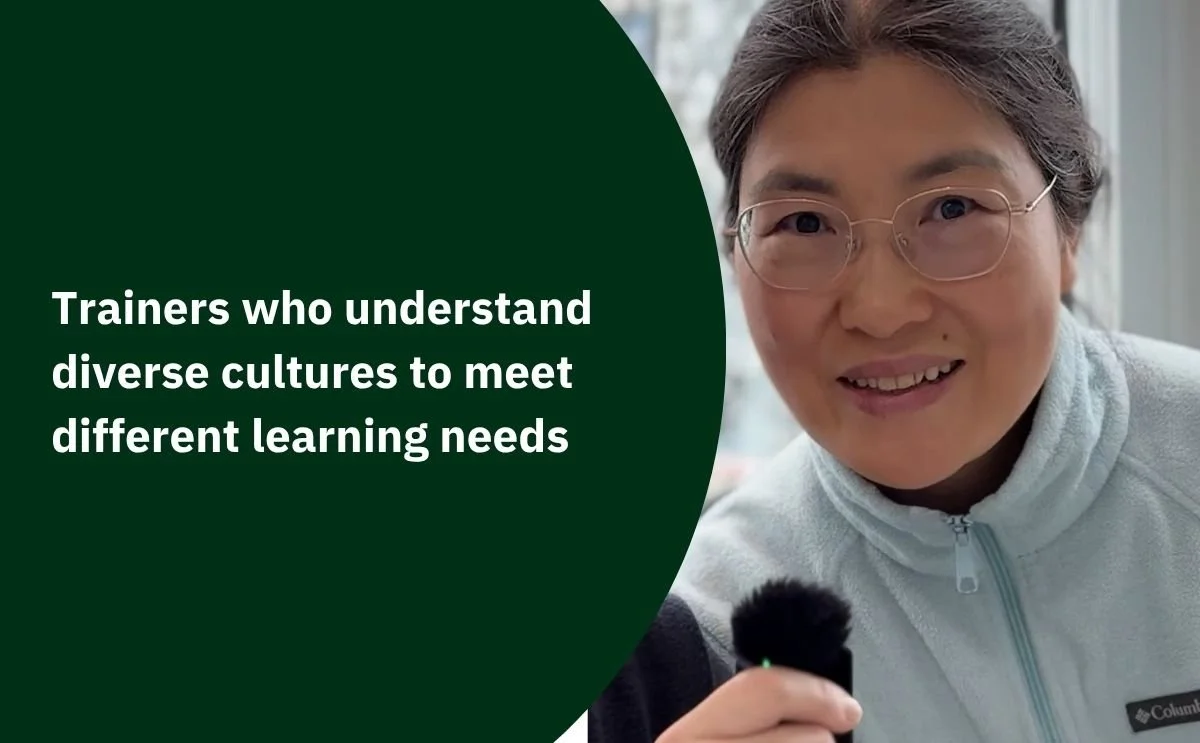
Susan is a current SEE Program participant with Max Solutions, and her feedback points to something that data alone can miss: the quality of the teaching relationship.
Susan shares her appreciation for trainers who value and respond to cultural diversity — an approach often referred to as culturally responsive pedagogy, where instruction is deliberately adapted to the cultural knowledge, prior experience and communication styles a learner brings with them.
In practice, our trainers build trust and rapport by tailoring teaching methods to a wide range of learning needs. That might mean adjusting pace, using contextual examples drawn from participants' own lives and industries, varying between visual, verbal and hands-on delivery, or creating space for learners to practise without fear of getting it wrong.
This is not an add-on to the program. It is central to how we deliver it — and it is a key driver of participant outcomes.
Susan is optimistic about her future. She's looking forward to a career in support work, a growing sector across aged care, disability services and community health, and one where communication and interpersonal skills are core to daily practice.
Program Details and Funding
The SEE Program is funded by the Australian Government Department of Employment and Workplace Relations and delivered by Max Solutions, RTO 0667.