
Learning English through First Nations art during NAIDOC Week
Supporting settlement through language, culture and connection
The Adult Migrant English Program, known as AMEP, provides free English language tuition to eligible migrants and humanitarian entrants in Australia. Funded by the Australian Government Department of Home Affairs, the program helps learners build the English skills they need for everyday life, work, study and community participation.
Language learning is also closely connected to settlement. For newly arrived migrants, building confidence in English often goes hand in hand with understanding Australian culture, connecting with local communities and feeling a stronger sense of belonging. Through the AMEP, learners develop communication skills while also exploring the social and cultural knowledge that supports life in Australia.
This NAIDOC Week, Max Solutions RTO’s AMEP class in Wollongong brought language learning, creativity and First Nations culture together through art.
Exploring Aboriginal and Torres Strait Islander art
NAIDOC Week is a national celebration of the history, culture and achievements of Aboriginal and Torres Strait Islander peoples. It provides an important opportunity for all Australians, including newly arrived community members, to learn more about First Nations cultures, histories, stories and continuing connection to Country.
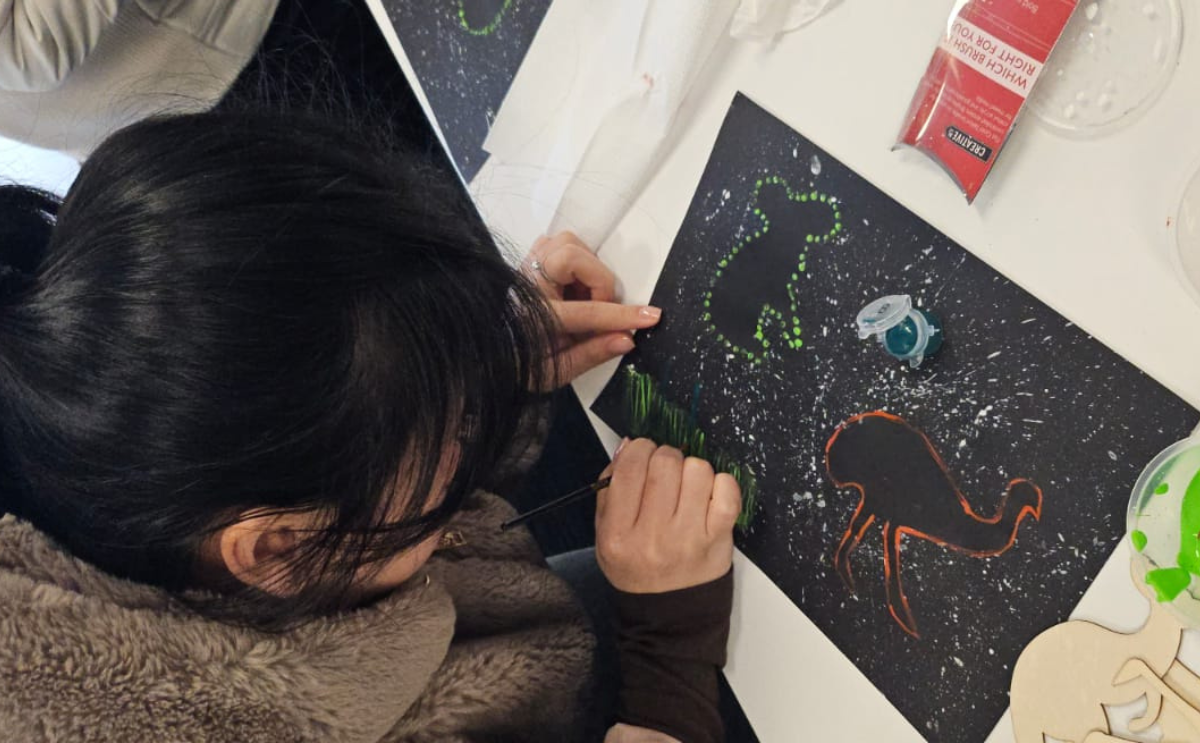
In Wollongong, AMEP students swapped grammar drills for ochre tones and symbolism as they explored Aboriginal and Torres Strait Islander art. The activity invited learners to connect with ideas of Country, native animals, colour, pattern and meaning.
Aboriginal and Torres Strait Islander art is a rich and diverse form of cultural expression. It can communicate stories, identity, knowledge, place, spirituality and relationships between people, land, water, animals and ancestors.
A calm space for reflection and learning
The session was soundtracked by the music of Kutcha Edwards and the late Geoffrey Gurrumul Yunupingu, creating a space of reflection and calm.
Kutcha Edwards is a Mutti Mutti singer, songwriter and advocate whose music shares stories of identity, resilience and culture. Geoffrey Gurrumul Yunupingu was a celebrated Yolŋu musician whose voice and songs brought First Nations languages, culture and stories to audiences around the world.
The music helped create an atmosphere where students could listen, reflect and engage thoughtfully with the themes of the lesson.
Building English skills through creative discussion
Throughout the activity, learners discussed colour, symbolism and meaning. They asked questions, shared interpretations and described their own creative choices.
In doing so, students practised important English communication skills in a meaningful context, including:
Speaking and listening
Asking questions
Describing colours, shapes, animals and patterns
Sharing opinions and interpretations
Learning new vocabulary
Building confidence in group discussion
This approach supported language development while also encouraging curiosity, respect and cultural understanding.
More than English lessons
We deliver the AMEP to go beyond merely teaching English. The program helps migrants build the confidence, cultural understanding and social connection they need to settle and thrive in Australia.
Activities like this show how language learning can be connected to creativity, community and shared understanding. By engaging with First Nations art and music during NAIDOC Week, students had the opportunity to practise English while learning more about the world’s oldest continuing cultures.
The AMEP is funded by the Australian Government Department of Home Affairs. Max Solutions RTO 0667 is subcontracted by Navitas to deliver the program.